
Blue-Green Deployment: A Safe Way to Release Software Without Downtime
A simple and safe deployment strategy that delivers software updates with zero downtime.
Today’s applications are expected to stay online every second. Users can book rides, order food, transfer money, and stream videos without having to wait. As a result, a major problem for software teams is how to upgrade the system without interrupting it.
Blue-green deployment is a release strategy that solves this challenge. With no downtime and the flexibility to quickly roll back if something goes wrong, it helps teams safely deploy new versions. Blue Green Deployment makes applications release trustworthy and simple, much like owning two identical residences and only moving into the new one when everything is ready.
What is Blue-Green Deployment?
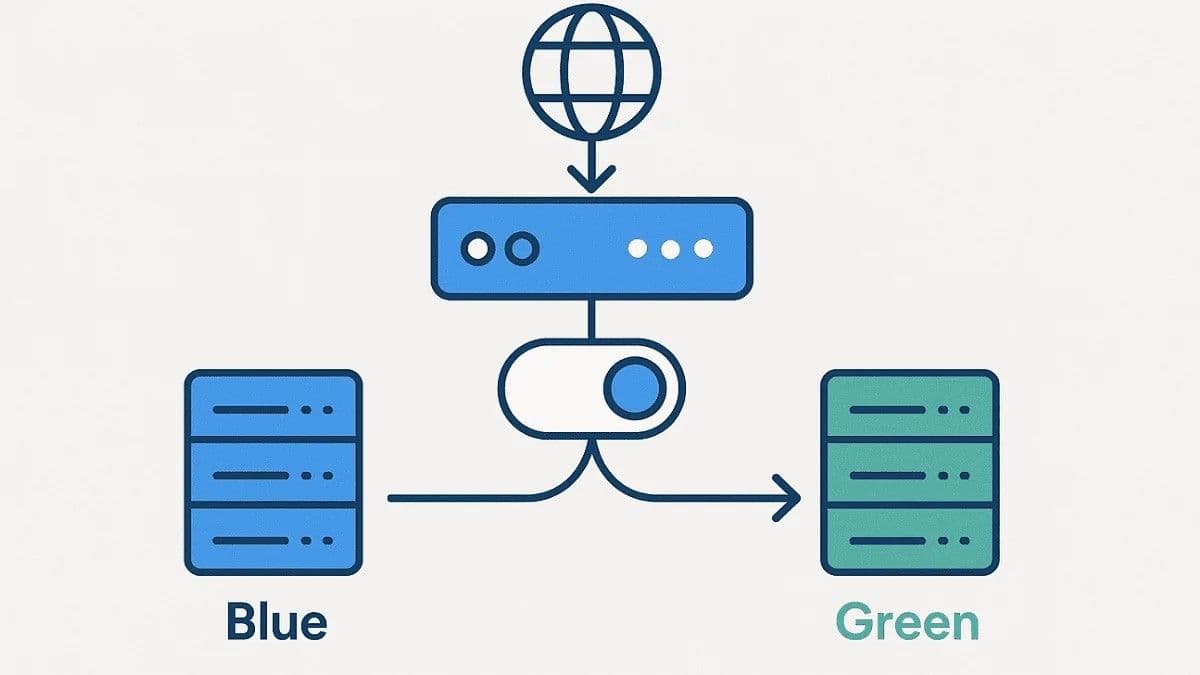
In blue-green deployment, two production environments are used:
- Blue environment: The current live system that all users are connected to.
- Green environment: An identical system that contains the new version of the application
Users are still using the blue environment until the new version is implemented and tested in the green one. Traffic is changed from blue to green once the green version is verified to be accurate. The switch is made instantly. Traffic can be returned to blue in a matter of seconds if a problem arises.
This approach eliminates the possibility of a malfunctioning release impacting users and prevents direct upgrades on the live system.
Core Ideas Behind Blue-Green Deployment
1. Two Active Environments
You have two versions of your system running at the same time, but only one of them receives user traffic. This allows developers to test the new version in a secure environment without interfering with the live system. Because both environments are identical, anything that works in the green environment should work the same way when users are switched to it.
2. No Changes Made on the Live System
The blue environment stays untouched while users are on it. You never directly change or modify Blue. Instead, all updates, bug fixes, configuration changes, and infrastructure changes are made only in the green environment. This prevents accidents that could break the live system. The green environment becomes the new live version once it has been thoroughly tested and shown to be stable.
3. Instant Traffic Switch
The traffic is switched from blue to green using a routing system that directs all incoming requests to the green environment. The switch happens instantly in a single action. Users don’t encounter any errors, site reloads, or downtime during the transfer as a result.
4. Fast Rollback
You can quickly return traffic to blue if something goes wrong after switching to green, such as issues, increased errors, poor performance, or broken features. Blue is a safe backup because it was not altered during the release. Since the rollback simply involves a routing change and doesn’t require redeployment or urgent fixes, it merely takes a few seconds.
How Blue-Green Deployment Works
- Prepare the Green Environment
Make sure the infrastructure in the blue and green environments is same. While keeping the blue environment running as the live system, deploy the updated application version to the green environment and set up the necessary resources and settings. - Test the Green Environment
Run smoke tests, integration tests, and performance checks. Verify that every feature, API, and service is operating as it should. - Switch Traffic
Change user traffic from blue to green. Keep an eye on logs and important data including system performance, response times, and failures. - After the Switch
If everything works correctly, green becomes a new live environment. If there are any problems, immediately change the traffic to blue.
Benefits of Blue-Green Deployment
- Zero Downtime: Users continue to use the system without any interruption during the release.
- Quick Rollback: If an issue arises, you are able to quickly switch to the earlier version.
- Lower Risk: The new version stays isolated in the green environment until it is fully tested.
- Better Testing: Testing is more trustworthy because the green environment is an exact replica of production.
- CI/CD Friendly: It allows frequent releases and works well with automated workflows.
- Side-by-Side Comparison: Behavior, performance, and resource utilization can be compared between the two environments.
Challenges of Blue-Green Deployment
- High Cost: It may take more resources to maintain two complete environments.
- Database Changes: When both environments remain compatible, managing schema updates can be challenging.
- Sessions Stored in Memory: User sessions may break if they are tied to only one environment.
- Complex Routing: Large systems could make it more difficult to route traffic between two environments.
- Full Production-Level Testing Needed: It is important to test the green environment at the same depth as the live system.
Other Deployment Options
- Canary deployments: Release the new version to a small group of users first.
- Rolling updates: Gradually replace system components.
- Feature flags: Turn on or off features within the program without having to reinstall it.
For crucial systems like financial platforms, SaaS products, and sizable public-facing apps, blue-green deployment is an excellent option. It can be more than what is needed for simple internal tools.
More : click here
Conclusion
Blue-green deployment helps modern systems deliver updates in a safe, predictable, and zero-downtime way. It gives software teams the confidence to push changes more often and react faster when problems appear. By maintaining two identical environments and switching traffic cleanly, businesses gain reliability, user trust, and operational stability.
Blue-green deployment is supported by many platforms, such as AWS, Kubernetes, and CI/CD tools. Any team can implement it and enhance their release process with proper planning and automation.
Blue-green deployment accomplishes more than just minimizing downtime. It creates a development culture where users always have a stable experience and safe, quick releases are the standard.